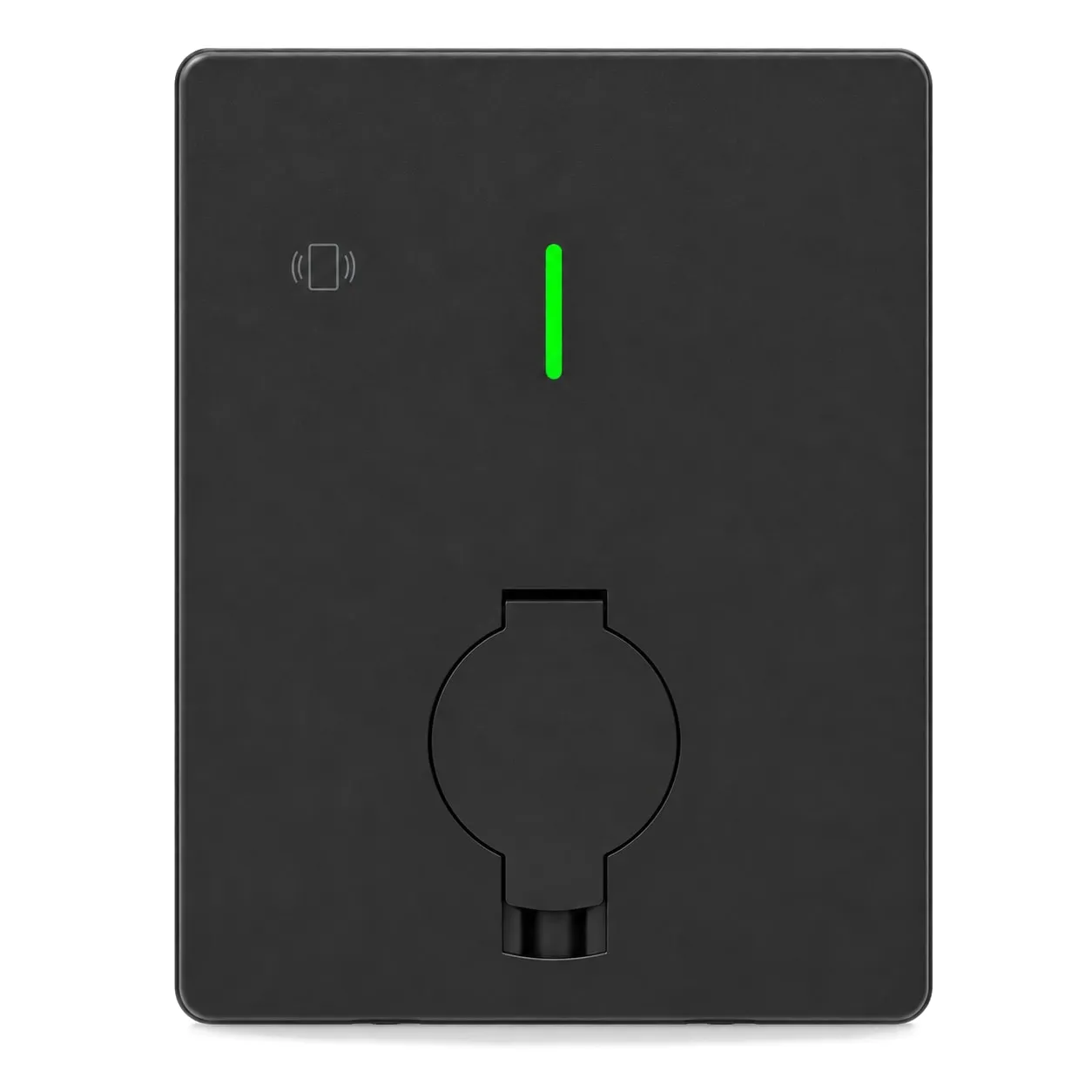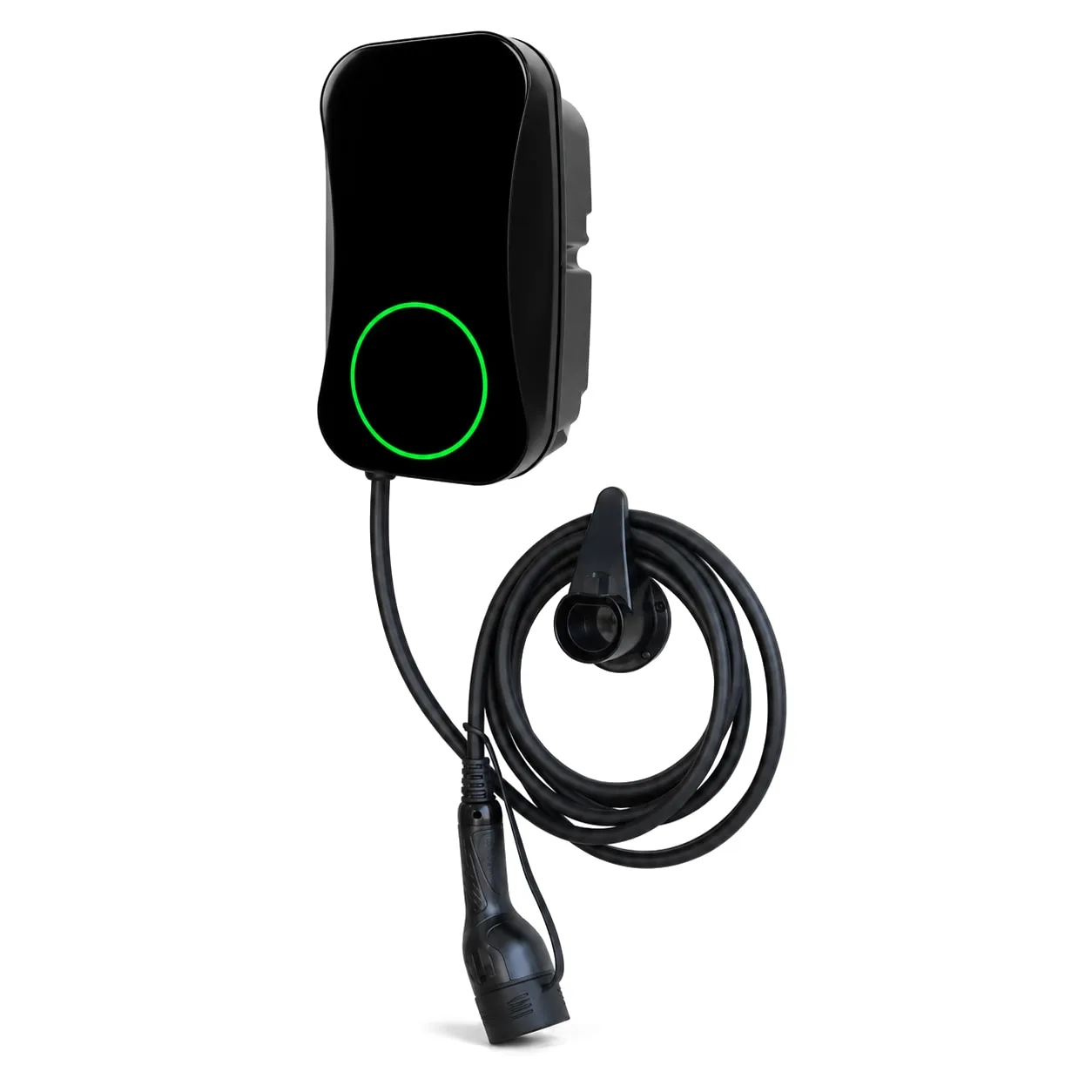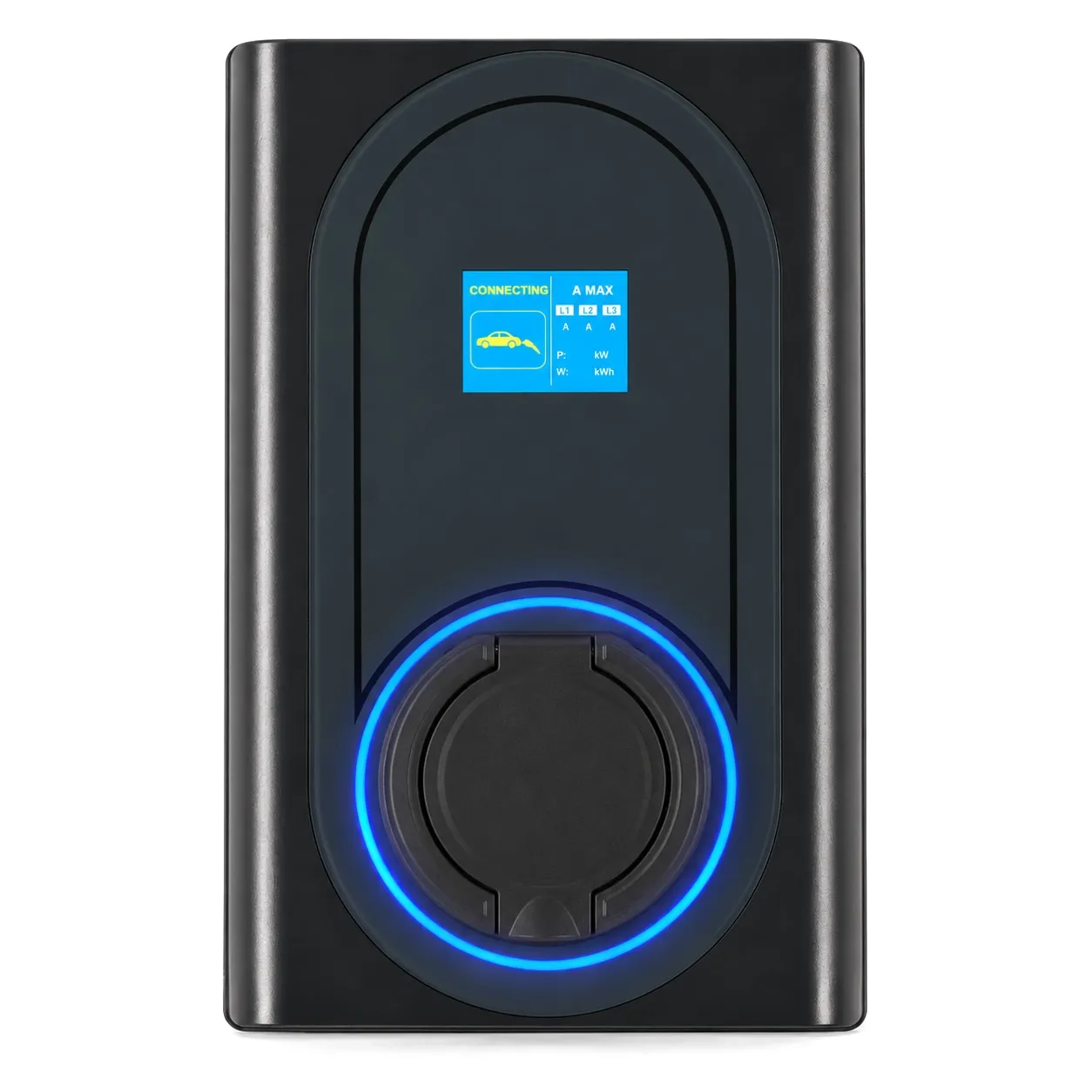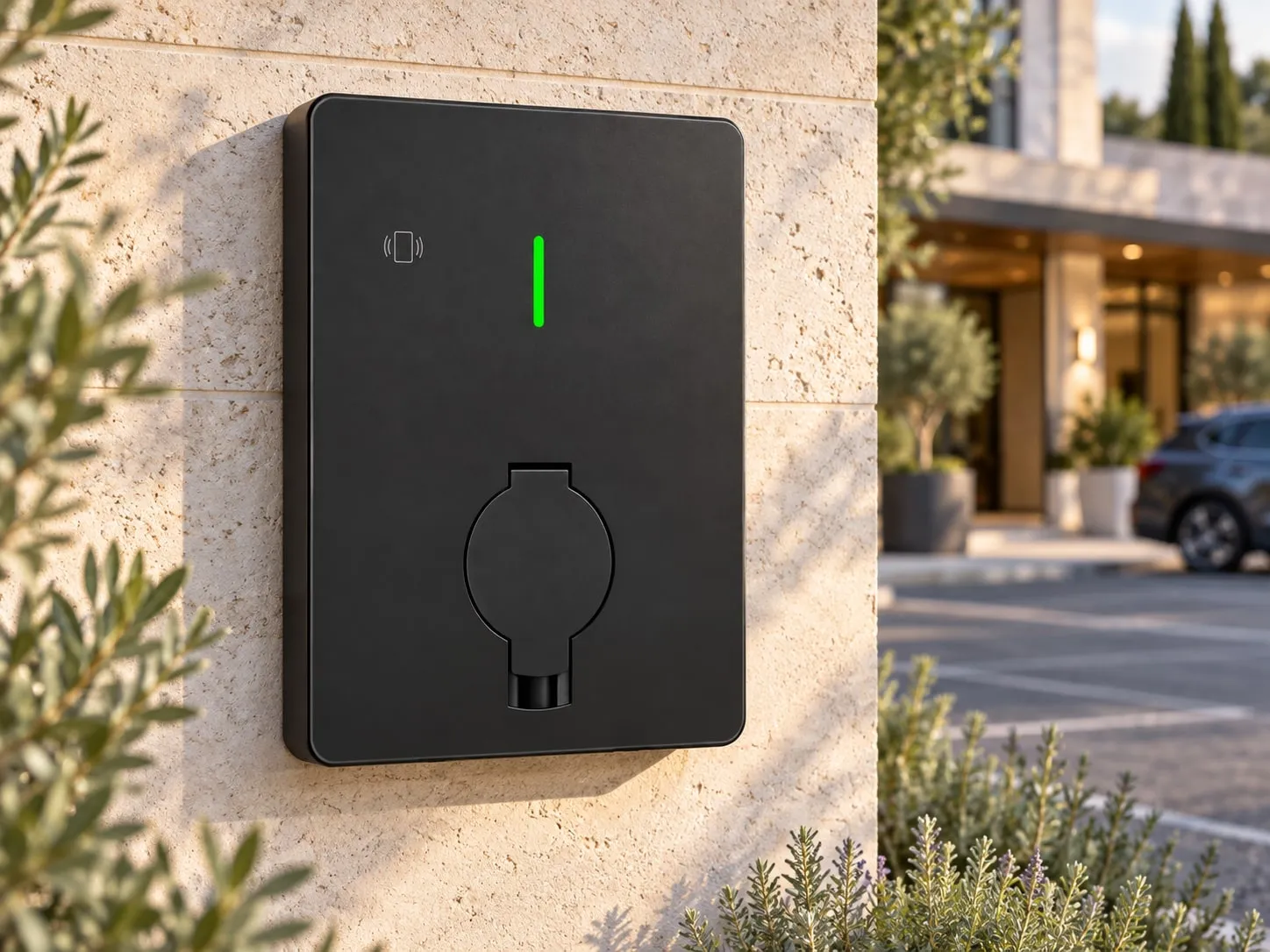
A normal wallbox moves energy one way: from the grid into the car. A V2G charger — short for vehicle-to-grid — can also send energy back out of the car’s battery, to the house or to the public grid. That turns a parked electric car into a large, mobile battery.
V2G, V2H and V2L at a glance
| Term | Energy goes from the car to… | Typical use | Needs grid approval? |
|---|---|---|---|
| V2L (vehicle-to-load) | A device plugged into the car | Tools, camping, backup lamp | No |
| V2H (vehicle-to-home) | The house wiring | Evening use of solar energy, backup | Usually not, if no export |
| V2G (vehicle-to-grid) | The public grid | Selling energy at peak times, grid services | Yes |
All three need a car that allows discharging. V2H and V2G also need a bidirectional charger such as a V2G wallbox.
How a bidirectional AC wallbox works
- The car and charger agree on the session. Over the charging cable they talk using ISO 15118-20, the standard that adds bidirectional power transfer to the plug-and-charge protocol.
- The energy platform sets the direction. An energy manager, utility or aggregator sends charge or discharge commands to the wallbox over OCPP 2.0.1.
- The car’s onboard equipment converts the power. On an AC system, the vehicle handles the conversion between its DC battery and the AC supply; the wallbox controls, measures and protects the flow.
- Safety stays in the wallbox. Residual-current protection, over-current and over-temperature protection work in both directions.
When a V2G charger makes sense
- Homes with solar panels — store midday surplus in the car and use it in the evening.
- Time-of-use tariffs — charge at night when energy is cheap, discharge during expensive peaks.
- Pilot projects and fleets — energy companies and fleet operators testing grid services with many parked cars.
- Future-proofing — buyers who expect to switch to a V2G-capable car within a few years.
If none of these apply, a standard smart wallbox such as the EVX Series is the simpler choice.
What to check before you buy
- The car. Ask the car maker whether bidirectional AC charging is enabled for your model and market.
- The communication standard. Look for ISO 15118-20 on the charger and OCPP 2.0.1 for the platform.
- The supply. Single-phase homes are limited to 7.4 kW; three-phase homes can go to 11 or 22 kW in both directions.
- Local rules. Grid export rules and metering requirements differ between countries and network operators. Confirm the current requirements before enabling export.
- The energy platform. Choose a supplier or app that actually controls bidirectional charging; the hardware alone does not decide when to discharge.
The MOLZEX V2G Series
The V2G Series is our bidirectional AC wallbox: 7.4, 11 or 22 kW in both directions, ISO 15118-2 and ISO 15118-20 power-line communication, OCPP 2.0.1, and a housing only 97 mm deep. With a car that does not support discharging, it simply works as a smart AC charger with app control and load balancing.